Category: Essays

  • AI Will Not Replace Your Job, You’ll Be Fired Anyway: Part 1

    AI Will Not Replace Your Job, You’ll Be Fired Anyway: Part 1

    AI is not good enough to replace you at work, and yet, it might soon be the reason you lose your job. How could that be possible?

    I believe there are four different ways in which even incompetent AI could crush your career. And a fifth possibility that might actually be a good outcome for you and me.

    In this series of posts, we will explore these five reasons together, and enjoy some mutual anxiety over the future.

    This article will cover the first reason – CEOs will screw up and you will pay the price.

    If that sounds like a tall claim to you, let me bring your attention to a recent piece of history that ought to be fresh in the minds of everyone from Zoomers to Boomers. The Coronavirus pandemic – it was a period of time that cost us so much, but also offered valuable lessons. We have to take care that we do not forget those hard earned lessons too soon.

    In particular, the lesson we will look at is how share price addiction led to poor planning that was expertly fixed by corporate leaders through mass layoffs.

    It began as an impressive demonstration of the power of technology. The pandemic was a time of suffering for many, but a silver lining to the dark cloud was the abundance of online services that let us continue to work, collaborate, order groceries, and entertain ourselves. The spike in usage of online services led to a business boom for companies like Amazon, Netflix, and Zoom. In a sensible world, this should have been great for consumers, and great for the businesses who would have seen increased profits during this time.

    Unfortunately, such happiness is not allowed in a business environment that compulsively chases the illusion of growth, through ever-rising share prices. The sudden surge in online businesses during the pandemic would almost certainly have had an expiry date. Once Covid retreated, and people could move freely in public again, there would be a return from the digital to the physical.

    But for a business environment that had become used to compulsive growth, this was bad news. And so they crafted narratives that could sustain the growth seen during the pandemic. They said that the increased usage of online services was not a temporary necessity – it was ‘the new normal’.

    It was half wishful thinking, half an attempt to shape public perception and permanently change social and economic reality.

    Corporations built upon the ‘new normal’ strategy in various ways.

    Amazon thought the new normal would spell the death blow for struggling physical retailers, heralding the age of total e-commerce domination. They invested heavily in massive new warehouse capacity.

    Netflix thought the new normal would be one where people would only find happiness within the confines of their homes, their eyes fixed upon a screen, binge watching shows on Netflix. They ramped up spending on content by over 20% in 2022.

    And Facebook … oh boy. During the height of the pandemic, CEO Mark Zuckerberg shared his very smart vision for what the world would soon look like. He was going to give people the opportunity to spend hours with their faces covered by virtual reality headsets, and human society would move from living rooms and offices to cartoonish three-dimensional worlds. It was going to be the greatest thing since apps, maybe even since sliced bread. To his credit, Mark put his money where his mouth was, and committed hard to this vision, renaming his company to ‘Meta’. In Mark’s new normal, over a billion people would live sort-of lives in his meta-verse. His company has spent tens of billions of dollars to make this not-a joke.

    What happened next? The new normal turned out to be a false narrative. As soon as pandemic restrictions were lifted, people rushed to make up for lost time. They relished being able to go out for a drink, watching movies in cinema halls, traveling, and meeting friends and loved ones in person.

    To be clear, there was no catastrophe for digital businesses, as adoption had been on a strong trajectory before the pandemic, and this long term trend continued after the pandemic was lifted. The only ‘issue’ was that the anomalous growth of the lockdown months were over, and financial projections made under the delusion of a ‘new normal’ had failed. 

    So the massive investments made into warehouses, content, and virtual worlds were not going to pay off. Growth in profits was going to fall under expectation, and this was starting to reflect in share prices. The NASDAQ 100 (representative of many of the top tech companies in the US) had reached 16,500 points in late 2021, but had fallen to under 11,000 points by late 2022. All the gains made during the pandemic were wiped out in this collapse. 

    Business leaders had failed in their bets, and shareholders were left seeing a grim, downward line on charts. Thanks to those charts, it was not enough to heal from the prolonged tragedy, or celebrate the recovery of economic activity. So how did these business leaders fix their errors? Simple – they let accountability trickle down the hierarchy till it accumulated amongst members of their staff. They rolled out mass layoffs, firing thousands of workers while chanting words loved by Wall Street such as ‘efficiency’ and ‘realignment’.

    So how does this relate to the ongoing AI rush? Tech corporations have barely washed off the stench of the ‘new normal’ narrative, but have moved on to declaring the coming of an AI revolution. The surging investments of the pandemic are back, with corporations spending eye-watering amounts of capital on AI infrastructure. Over the next two years, Amazon, Meta, Google, and Microsoft will spend $750 billion on datacenters, servers, and chips. Yes, that’s ‘billion’ with a ‘b’.

    Investments are only as good as their returns though, and that is where the AI rush starts to look dubious. AI has amazed us with its capabilities and has helped millions to research, code, and fabricate alarmingly-realistic videos. Yet, it has major limitations as a replacement for human intelligence, as shown by reports that AI projects have failed 95% of the time. However, we also see reports of companies conducting mass firings, often citing AI as a reason. But the real story emerges when we look closer at these stories, such as Amazon announcing their largest ever layoffs. Amazon did not say that they sent home workers because they were replaced by AI. They took humans off their payroll in order to feed the insatiable appetite of their AI initiatives for ever increasing capital.

    While technology will no doubt improve, it is unclear if algorithms trained on past human output can fundamentally match the human ability to learn, comprehend, and think. The shining orb that is currently lifting up the stock market and justifying endless spending may turn out to be nothing but a flimsy bubble, waiting to burst upon all of us.

    What happens if AI ends up falling short, just like the Metaverse and other bets on the ‘new normal’? Mark Zuckerberg, Sam Altman, and other tech bosses already have a playbook that works. Shrug their shoulders at their flawed strategies, and sagely proclaim that they are now committed to efficiency. But how will that convince Wall Street? Simple – turn to a time-honoured tradition of trickling down accountability, and fire tens of thousands of employees. The markets will smile, and all will be well in the corporate world.

    So yes, AI might never be good enough to do your work, but could be bad enough that it costs you your job.
  • My novel has reached 30K words

    My novel has reached 30K words

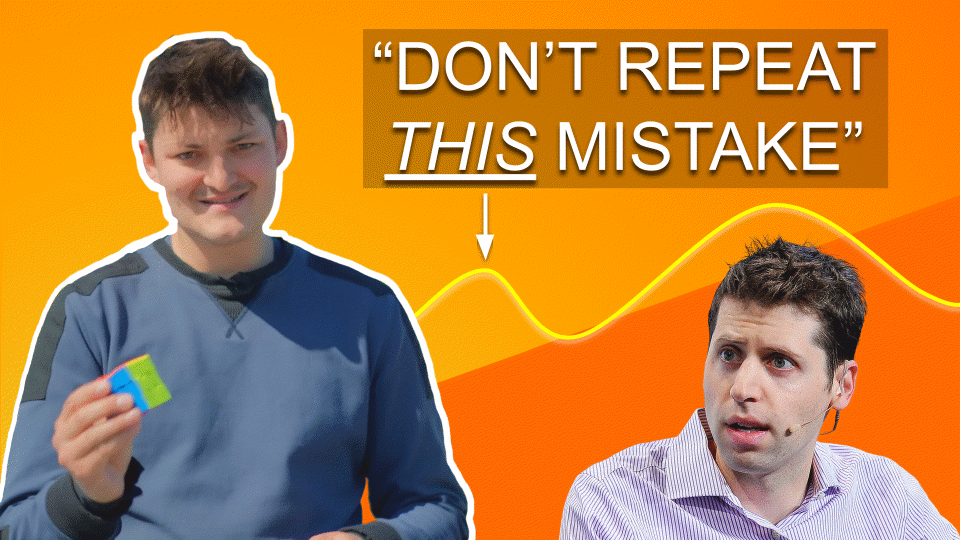
    An older video capturing the time my novel The Forever Dilemma crossed thirty thousand words.

  • The Call To Write

    The Call To Write

    We are a product of circumstance, choice, and chance.

    In this introductory post I reflect on how these forces of my production, have led me to a starting this blog.

    The simple explanation is that I have started this blog to promote an upcoming science fiction novel. More about the novel later. More interesting than the simple explanation, is the story of the journey that got me to this point in life.

    First, the CIRCUMSTANCES. Loneliness was a constant presence in my early life, largely because I was both an only child, and a third culture kid. Third culture life is not terrible by itself, and could be great with the right mindset. Preferring isolation to integration and predominantly befriending other expatriates is not the right mindset. It is a means to make an enemy of geography, and make a casualty of social satisfaction – especially as a child, whose mobility is limited. It also did not help that I was usually two or three years younger than my class average (I eventually finished my engineering degree at nineteen).

    Our life conditions are only as interesting as the journeys they shape in our lives. This is where other circumstances helped – a home with a good number of books lying around, Mum regularly concocting original bedtime stories for me, and English teachers who cheered the creative energy I put into essays and composition. These made for fertile conditions for loneliness to fuel an active imagination.

    Then there were CHOICES. As an undergraduate, I did not do much to be proud about, but two activities had a profound impact on my life – writing a poem and arguing with people on the Internet.

    The poem I wrote (and rewrote) was based on an ancient Indian epic, The Ramayana. This poem was written over a period of three years, and comprised over seven hundred verses. I wish I could say I was proud of this work, but I’m not. I had written it at a time where I barely knew anything about poetic techniques. My only priorities while writing down the lines of this poem was to somehow create rhyme between two lines, and to somehow progress the poem at one verse a day. The work itself might be of poor quality, but for a procrastinator like me, it remained a comforting symbol of my ability to actually complete a long term project with slow burning persistence, drip-fed with daily discipline.

    Many 90s kids would be familiar with Internet forums – the precursors of sites like Reddit. These were the meeting spots and battlegrounds of a fledgling horde of armchair warriors. These were formative days that exposed me to a lot of the political and social thinking that still rattles around in my head. A lot of the opinions I hold may have changed since those days, but those sites will forever remain the primordial soup from which many of my early adult thoughts emerged. Perhaps it is nostalgia speaking, but unlike the algorithmic echo chambers of modern social media, the forums of the ‘oughties shaped opinions in a more raw and organic way. I remember the feeling of reading through a thread, thinking the points made in one post were sensible, then finding that the very next post made me lean in a different direction. I also spent hours in written debates, honing words that would mould the minds of readers – or so I hoped. 

    Anyway, what does this digression about the forums of the 2000s have to do with pushing me to write a novel? It was the spirit of armchair argumentation and activism, along with the pain of conflicts I faced up close in my personal life, that led me to the seeds of my science fiction book.

    It was a simple observation: humans rarely changed, but humanity was ever-changing. It struck me that the reason for this was the constant procession of generations that allowed newer ways of thinking to come to the fore. Which raises an obvious question in the mind of a science fiction fan, what happens if people live forever? Will human immortality lead to humanity crystallised in an icy stagnation? And so, the premise of a science fiction book was born. A book I came to call The Forever Dilemma

    Choices may also be negative – not in the sense of being bad, but in the sense of not choosing to act. Since my early twenties, my career choices were in a conventional career in technology that saw me write code in several languages, add an MBA to my qualifications, and work in many companies including a long stint at Amazon. Over the years, I had pursued creative interests in limited ways, writing a few poems, short stories, and building apps out of my ideas. However, none of them came close to the scope of the Rhyming Ramayana of my teenage years.

    Why did I do such poor justice to my interests? Sure I was busy. There was work, there was family, there was our child, then another child, and all the reasons behind the modern middle class poverty of time. Most of all though, was my greatest weakness and shame – an utter lack of self discipline.

    And yet, here I am with a completed draft of my novel, gleefully sharing it with people in the industry in an attempt to get it published. How did this come to be? That brings us to the final of the three ‘C’ forces – Chance.

    CHANCE does not work in isolation, and can be shaped by our Choices. One such duet of chance and choice proved to be the elegy sung and the end of my conventional career. After seven years working at Amazon, my long simmering dissatisfaction at corporate life boiled over with a sense of finality. This dish was done cooking. So I decided to leave in 2022, and only take on any new roles if they offered the sort of empowerment and scope that I found worthwhile. To my surprise, such a role cropped up in a smaller firm thanks to a mentor I used to work with. I joined this smaller firm in an ‘intrapreneurial’ role. Ultimately, this role only resulted in further disillusionment with salaried work and was a final sign from the universe that I needed to make a hard choice. The universe proved to be impatient though, and made the choice for me, leading to my project and job getting terminated within this company. This welcome push that I received in February 2024 was the chance that let me make the final choice – I was not going back to any corporate role. It was time to take the path less traveled.

    Here, my earlier choices had served to make the path more clear. As I had explained a few paragraphs back, I had been struck by thoughts of how immortality could deal a mortal blow to human change and progress. In 2017, I had summoned enough willpower to start writing a novel centered on this theme. The book had spent years wading forward between my busy schedule and undisciplined routines. Just before my career ended for good, The Forever Dilemma had reached a word count of 30,000. Now, freed from work, I decided to quiet the legion of creative ideas singing in my mind, and focus only on writing the book. A year of patchy progress followed, till February of 2025. The book had crawled past the fifty thousand mark, and I was on the verge of my fortieth birthday. In a moment of inspired action, I decided that I was going to turn on the afterburners, and get to a complete draft of my novel before I turned forty.

    Some of the most productive weeks of my life followed, till I finally sat back and beheld my greatest achievement in two decades. 

    Circumstance, Choice, and Chance had brought me the manuscript of my first novel, my long awaited answer to the call to write.